
Taxi OB Calculator Sweden
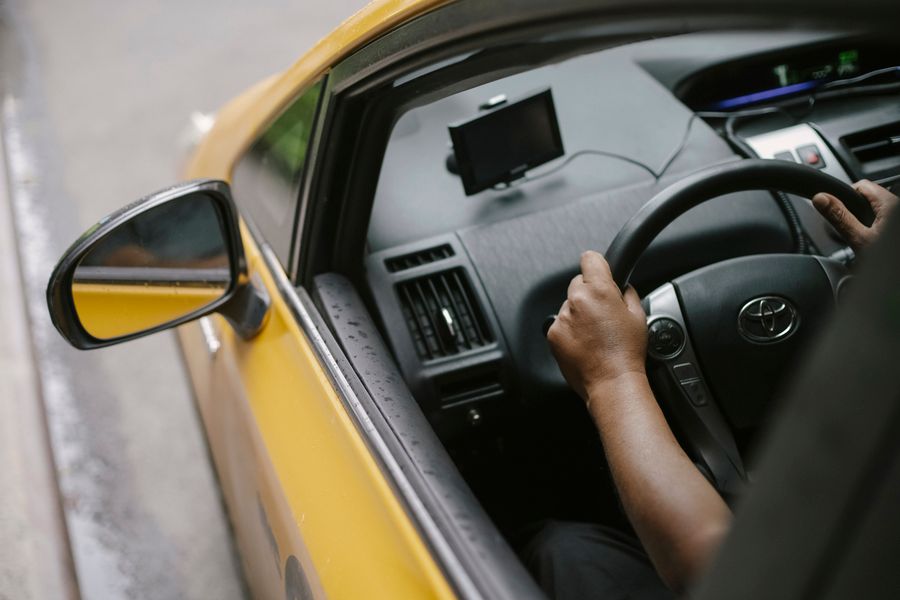
OB is part of a taxi driver's pay in Sweden. If you drive evenings, nights, weekends or holidays, a big share of your wage comes from OB supplements. This guide explains what OB means, how OB1 and OB2 differ, and how the amount is worked out from your rest-time slip, so you can check that your payslip is correct.
What is OB?
OB stands for obekväm arbetstid — "inconvenient working hours." It's a wage supplement paid on top of your normal hourly rate when you work at times most people don't: evenings, nights, weekends and public holidays. The rates and exact hours come from the collective agreement (Taxiavtalet).
For taxi drivers, OB is tied to the Vilotidsrapport — the rest-time slip that records when you rested during a shift. Your worked time is simply the gaps between those rest periods, and each gap is priced by when it happened.
OB1 vs OB2 — the two bands
There are two OB levels. OB2 is the higher one, paid for the most antisocial hours; OB1 is the lower one. Everything else is Normal time with no supplement.
| Band | When it applies | Example rate |
|---|---|---|
| OB2 | Fri 19:00 → Sat 06:00 · Sat 19:00 → Sun 06:00 · Sun 19:00 → Mon 06:00 · public holidays and the day before a holiday, 19:00 → 06:00 | 52.79 kr/h |
| OB1 | Weekday nights (Mon–Fri) 19:00 → 06:00 · Saturdays & Sundays 06:00 → 19:00 · public holidays 06:00 → 19:00 | 31.58 kr/h |
| Normal | Mon–Fri daytime 06:00 → 19:00 (not a holiday) | — |
The figures above are the calculator's default example rates. Your actual OB rates depend on your collective agreement and the year — you can change them in the calculator.
Day, night and the "evening date" rule

A night belongs to its evening date: the slice from 00:00–06:00 is owned by the previous evening. So a shift that starts late on Friday and runs past midnight into Saturday morning still counts as a Friday night — and stays OB2. This is the rule that trips most people up when they try to add hours by hand.
How taxi OB is calculated, step by step
- Read the Vilotidsrapport. Note each day's date and its rest periods (from–to times).
- Find the worked time. Worked time = the gaps between rest periods within the day's window.
- Split each worked slice at 06:00 and 19:00 (and midnight), so no slice spans two bands.
- Classify each slice as Normal, OB1 or OB2 by the time of day and the weekday (using the evening-date rule for nights).
- Multiply the OB1 and OB2 minutes by their rates and add them up — that's your OB pay.
Worked example
Friday shift, one rest period 04:15–16:15:
Worked time is 00:00–04:15 and 16:15–24:00. The early-morning slice belongs to Thursday evening → OB1 4 h 15 m. 16:15–19:00 is Friday daytime → Normal 2 h 45 m. 19:00–24:00 is Friday evening → OB2 5 h. At the example rates that's 4.25 × 31.58 + 5 × 52.79 = 796.33 kr of OB on top of base pay.
OB and your work / residence permit

If you work in Sweden on a work permit, OB is more than pay — it's part of your employment record, and it can be a sensitive area.
When you apply to extend your permit or for permanent residence (PR), Migrationsverket checks that your real working conditions matched the terms your permit was granted on — the agreed salary, the hours, and that your total pay reaches the collective-agreement level including OB supplements.
Practical points:
- Your reported OB and hours should match your Vilotidsrapport and payslips. Under-reported OB or mismatched hours can raise questions during an extension or PR review.
- Keep your own copies of rest-time slips and payslips — you may be asked to show your monthly pay met the required level.
- If an employer under-pays or mis-reports OB, it can affect your permit case, not only theirs.
Getting OB right protects both your income and your residence-permit case. Use the calculator to check every slip and keep a clean record.
Common questions
This page is general information, not legal or tax advice. OB rates and rules come from your collective agreement; permit decisions are made by Migrationsverket. For your own situation, check with Migrationsverket and your union (e.g. Transport).
Calculate your taxi OB
Photograph your Vilotidsrapport. The AI reads it, you check it, and OB1 and OB2 are calculated.
Last updated